What is the method for treating plating wastewater? Precipitation of heavy metal hydroxides [Basic Knowledge]
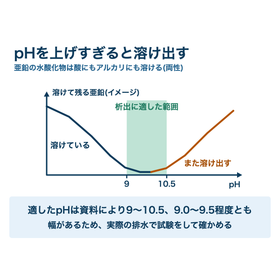
Does plating wastewater contain not only zinc but also cyanide and hexavalent chromium? This explains the mechanism of hydroxide precipitation and points to consider regarding pH and chelating agents.
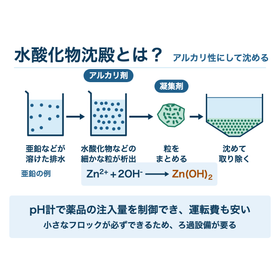
In the wastewater from the electroplating industry, cyanide, hexavalent chromium, boron, and fluoride often coexist alongside zinc. Cyanide compounds may be decomposed, while chromium compounds may be reduced, and pre-treatment can be carried out by separating these systems. The main treatment methods for heavy metals are as follows: 1. Coagulation and precipitation method: Changing them into forms that are difficult to dissolve in water and allowing them to settle. 2. Adsorption method: Allowing them to remain dissolved while adsorbing onto resins or similar materials. The coagulation and precipitation method, which has simple operations and equipment, is widely used. ■ What is hydroxide precipitation? When wastewater is made alkaline using alkalis such as caustic soda, slaked lime, or soda ash, many heavy metals precipitate in the form of hydroxides. This fine particulate matter is aggregated with a coagulant and settled out, which is known as hydroxide precipitation. ■ Why is it commonly used? Three main advantages are noted: 1. The amount of chemicals injected can be controlled using a pH meter. 2. Chemicals are readily available. 3. The operational costs are low. ■ Fine particles remain On the other hand, small flocs are inevitably formed during coagulation and precipitation, so filtration equipment is needed to capture the outflowing portion. Please feel free to consult us first.
- 企業:トリイ
- 価格:Other